
A spinal cord injury (SCI) is one of the most life-altering medical events a person can experience. The severity, location, and completeness of the injury determine everything that follows — from the medical care required in the first hours after an accident to the lifetime of rehabilitation, adaptive equipment, and support that comes after. This guide is designed to help SCI patients, families, and caregivers understand exactly what a spinal cord injury is, how it’s classified, and what to expect at every stage of recovery.
A spinal cord injury occurs when damage to the spinal cord disrupts the communication between the brain and the rest of the body. This can result from blunt trauma, penetrating injury, or compression of the spinal column — most commonly caused by car and truck accidents, falls, sports injuries, violence, or medical complications. The spinal cord does not need to be severed for a serious injury to occur; even bruising, swelling, or compression can cause permanent loss of function below the injury site.
Because the spinal cord carries signals for movement, sensation, and involuntary bodily functions, an SCI can affect far more than mobility. Depending on where the injury occurs, patients may also experience changes in breathing, bladder and bowel function, blood pressure regulation, and temperature control. For a full picture of how spinal cord injuries are diagnosed and treated from the outset, see our spinal cord injury overview.
Not all spinal cord injuries are the same. The level of injury along the spine — cervical, thoracic, lumbar, or sacral — determines which parts of the body are affected and how severely. Our breakdown of SCI levels and types covers each region of the spine and what an injury there typically means for function and independence.
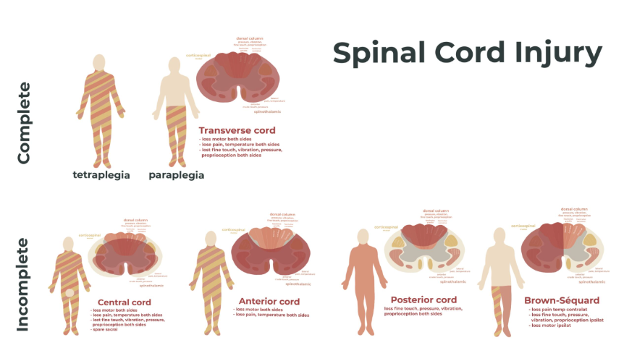
Injuries are also classified by completeness. A complete injury means total loss of sensation and motor function below the injury site, while an incomplete injury means some signal still passes through the damaged area. This distinction shapes both treatment and prognosis, which is why we cover complete vs. incomplete SCI in detail on its own page.
Spinal cord injuries are also grouped by the conditions they cause. Lower spinal injuries typically result in paraplegia, affecting the legs and lower body while generally preserving arm and hand function. Cervical injuries higher up cause quadriplegia, also called tetraplegia, affecting all four limbs and, in higher injuries, breathing function as well. Because the two conditions require very different care and equipment, it’s worth reviewing paraplegia vs. quadriplegia side by side.
For physicians and rehab teams, injuries are further sorted using a standardized system covered on our common SCI types page, which guides treatment decisions from the emergency room through long-term rehab planning.
Spinal cord injuries frequently occur alongside traumatic brain injury, particularly in high-impact events like vehicle rollovers, falls from height, and violent collisions. Because the same forces that damage the spine often affect the head, it’s common for SCI patients to also be evaluated for concussion or more severe brain trauma — our guide to traumatic brain injury covers the signs to watch for and why co-occurring injuries change treatment planning.
While spinal cord injuries can result from many causes, certain accident types are responsible for the majority of severe SCI cases. Car and truck accidents are the leading cause of spinal cord injury in the United States, and our page on car and truck accident injuries covers the specific injury patterns seen in high-speed collisions and rollovers.
Motorcycle and UTV accidents carry an elevated risk of spinal trauma due to the lack of structural protection compared to a passenger vehicle. Our guide to motorcycle and UTV accidents explains how the absence of a protective frame changes both the injury pattern and the emergency response.
Severity and Long-Term Outlook
The severity of a spinal cord injury is assessed using a combination of the injury level, completeness, and the patient’s neurological response in the days and weeks following the injury. In the most catastrophic cases, our page on severe SCI accidents covers the acute care and surgical intervention that shapes a patient’s long-term rehabilitation trajectory.
It’s important to understand that a spinal cord injury diagnosis is rarely final in the first days after an accident. Swelling can mask the true extent of function that may return, and many patients see gradual improvement over the following months as inflammation subsides — which is why early, specialized care at a facility experienced in SCI treatment matters enormously.
Medical understanding of spinal cord injury continues to evolve, particularly around early intervention and long-term outcome prediction.
None of this information is a substitute for direct medical care. If you or a loved one needs guidance on next steps after a new diagnosis, contact our team and we can help point you toward the right specialists and resources. Both of the managing partners Ammons and Willis are Board Certified Personal Injury Lawyers with decades of experience and over a billion dollars in settlements for their clients.
A spinal cord injury diagnosis is the beginning of a long road, not the end of one. Understanding your specific injury — its level, its completeness, and its likely course — is the foundation for choosing the right rehabilitation program, which we cover in our recovery and rehabilitation guide.
If your spinal cord injury resulted from an accident caused by another party, it’s also worth understanding your legal options early. Our spinal cord injury lawyers evaluate SCI claims differently than a general personal injury practice, largely because of how much future medical cost has to be proven and calculated correctly.
Request Your FREE CONSULTATION Today!
Call (800) 883-2020 or fill out the form below to contact our team.
WILLIS LAW FIRM 5005 Riverway Drive #160 Houston, Texas 77056 Principle Place of Business | Toll-Free (800) 883-2020 – Free Case Review – All Meetings By Appointment Only
The information on this website is for general information purposes only. Nothing on this site should be taken as legal advice for any individual case or situation. This information is not intended to create, and receipt or viewing does not constitute an attorney-client relationship.
Lastly, the list of past settlements listed on this site represents decades of the largest settlements for the catastrophically injured client(s) of the Ammons Law Firm and some past settlements of the Willis Law Firm. Upon written request, a breakdown of the attorney’s fees and expenses incurred along with the net settlement to the client are available.
© 2025 All Rights Reserved. Spinal Cord Injury Lawyers.