
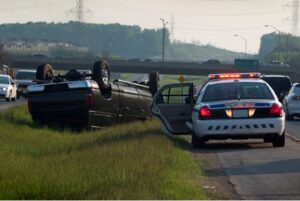
Vehicle rollovers are one of the leading causes of severe spinal cord injury on American roads, and the danger is often made significantly worse by a vehicle’s roof collapsing or crushing inward during the rollover sequence. When a vehicle’s roof fails to hold its structural integrity, occupants can suffer catastrophic spinal cord injuries — including burst fractures of the vertebrae — even in rollovers that would otherwise have been survivable without serious harm. If you or a loved one has suffered a spinal cord injury in a rollover accident, understanding both the medical mechanism of injury and the legal claims available is critical to pursuing full compensation.
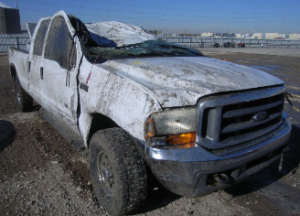
“Roof crush” refers to the structural collapse of a vehicle’s roof during a rollover, which reduces the survivable space inside the cabin and can drive the roofline down directly onto an occupant’s head and neck. When that downward force is transmitted through the top of the skull into the cervical spine, it can compress and shatter a vertebra from multiple directions at once — an injury known as a burst fracture, which is especially dangerous because bone fragments can be driven directly into the spinal canal, damaging or severing the spinal cord itself.
The location and severity of a burst fracture largely determines the outcome. A burst fracture high in the cervical spine, which is disproportionately common in roof crush injuries because the roof intrudes downward onto the neck first, frequently results in quadriplegia — paralysis affecting all four limbs. A burst fracture lower in the spine, in the thoracic or lumbar region, more often results in paraplegia, affecting the legs and lower body while preserving arm and hand function. Because roof crush injuries tend to involve extreme, concentrated force delivered in a fraction of a second, they’re also more likely to result in a complete spinal cord injury — total loss of function below the injury site — than injuries from lower-force accident mechanisms.
Larger, heavier pickup trucks and SUVs carry a higher center of gravity than passenger cars, which makes them more prone to rolling during sudden maneuvers, and their added weight can increase the force involved once a rollover begins. This risk is particularly relevant for the full-size and heavy-duty pickup trucks that make up a large share of vehicles on the road today, including the Ford F-150, F-250, and F-350, the Ram 1500, 2500, and 3500, and the Chevrolet Silverado 1500, 2500, and 3500. These trucks’ size and weight offer real advantages in ordinary driving, but they also mean that when a rollover does occur, the forces involved — and the demands placed on the roof structure to protect occupants — are significantly greater than in a smaller vehicle.
Rollover accident cases often involve two separate — and equally important — legal claims. The first is a standard negligence claim against the driver whose actions caused the rollover, whether through excessive speed, improper evasive maneuvers, distracted driving, or other unsafe conduct. The second, and often more significant in cases involving roof crush, is a product liability claim against the vehicle manufacturer if a design defect made the vehicle prone to rolling over in the first place, or if the roof structure failed to provide adequate protection once the rollover occurred. Federal roof strength standards exist, but meeting the legal minimum doesn’t always mean a roof is adequately protective in a real-world rollover — and roof crush litigation frequently centers on whether a manufacturer could have built a stronger roof at reasonable cost and chose not to.
Rollover accidents resulting in spinal cord injury frequently involve:
Defective roof structures that fail to prevent cabin intrusion
Our attorneys have represented spinal cord injury victims in rollover and vehicle defect cases for decades, including cases resulting in multi-million dollar verdicts and settlements tied directly to tire defects and rollover-related roof failures. You can review a portion of that history on our page of past verdicts and results including:
A burst fracture resulting in paraplegia or quadriplegia requires specialized, immediate rehabilitation to maximize long-term function, and we work with clients on cases across the United States to help connect them with the right care. Our page on top spinal cord injury rehab hospitals highlights facilities with dedicated SCI programs nationwide — because getting a client into the right rehabilitation program early is often just as important to their outcome as the legal case itself.
If you or a loved one has suffered a spinal cord injury in an SUV or truck rollover, whether or not roof crush was involved, contact our team today for a free, confidential case review. We’ll help determine whether driver negligence, a vehicle defect, or both contributed to your injury.
Request Your FREE CONSULTATION Today!
Call (800) 883-2020 or fill out the form below to contact our team.
WILLIS LAW FIRM 5005 Riverway Drive #160 Houston, Texas 77056 Principle Place of Business | Toll-Free (800) 883-2020 – Free Case Review – All Meetings By Appointment Only
The information on this website is for general information purposes only. Nothing on this site should be taken as legal advice for any individual case or situation. This information is not intended to create, and receipt or viewing does not constitute an attorney-client relationship.
Lastly, the list of past settlements listed on this site represents decades of the largest settlements for the catastrophically injured client(s) of the Ammons Law Firm and some past settlements of the Willis Law Firm. Upon written request, a breakdown of the attorney’s fees and expenses incurred along with the net settlement to the client are available.
© 2025 All Rights Reserved. Spinal Cord Injury Lawyers.